If you have ever picked up a saree so light it feels almost like air, and so soft it feels like it has been washed a hundred times even though it’s brand new — there’s a good chance it was mul cotton.
Mul cotton (also spelt mulmul or malmal) is one of India’s oldest and most loved handloom fabrics, and it’s having a real moment right now as more women move away from stiff, heavy synthetics and back toward fabrics that actually feel good to wear. But a lot of people still aren’t sure what mul cotton actually is, how it’s different from regular cotton, or how to take care of it once they own one.
This guide answers all of that in plain, simple language.
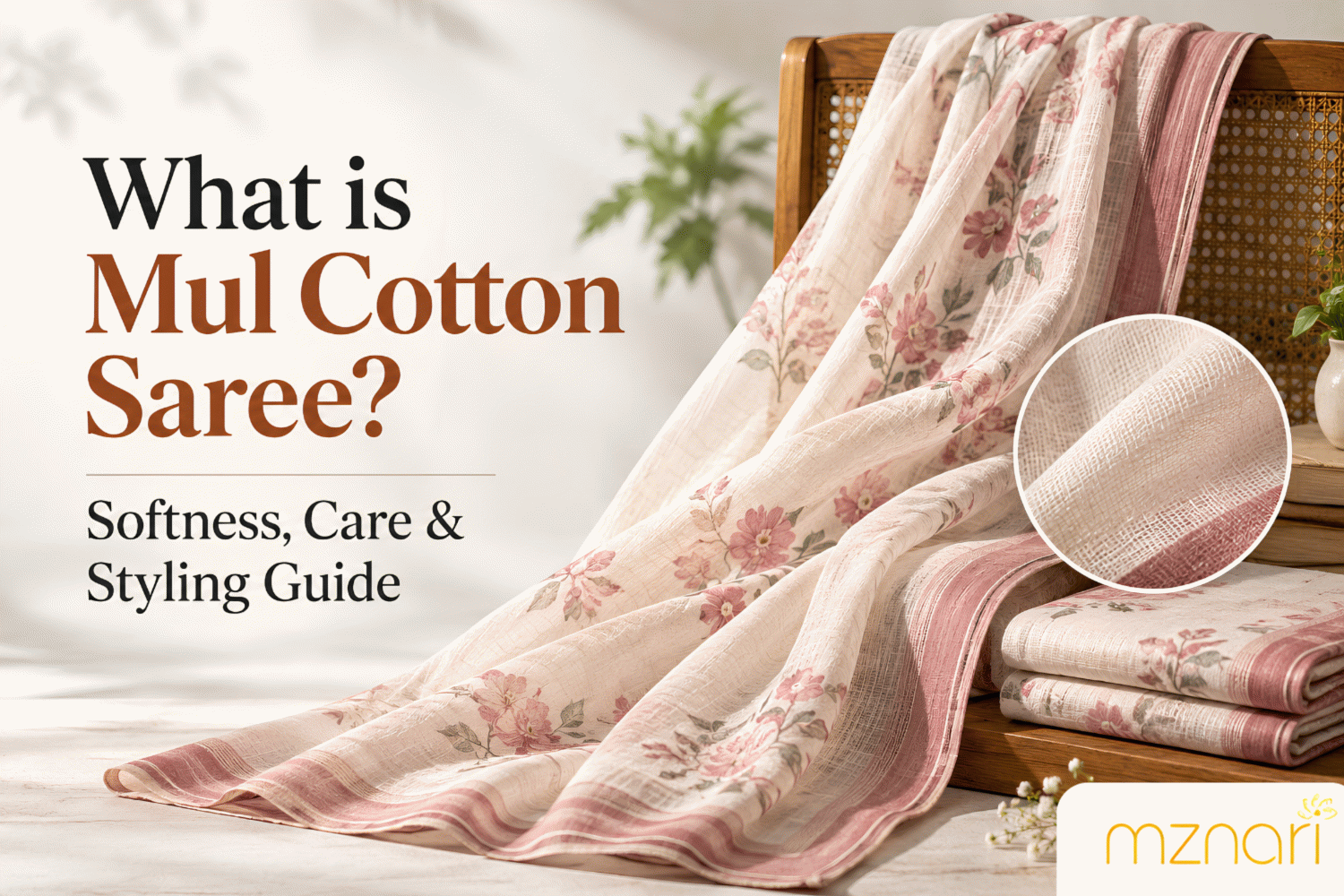
What is Mul Cotton Saree?
Mul cotton is a very fine, lightweight, plain-weave cotton fabric, traditionally handwoven using extremely thin cotton yarn. The word “mul” (or mulmul) comes from a fabric that was historically prized for being so sheer and soft that it was often compared to “woven air” in old travel accounts of Bengal, where it originated.
A mul cotton saree is made from this fabric. It is:
- Lightweight — much lighter than standard cotton
- Breathable — air passes through easily, which is why it feels cool on skin
- Soft from the very first wash — it doesn’t need years of washing to soften up
- Slightly sheer — the weave is fine enough that it has a gentle, airy drape rather than a stiff, structured one
Because of this combination, mul cotton has become one of the most searched fabrics for people asking “which saree is best for summer” or “which saree is softest to wear all day.”
Mul Cotton vs Cotton Saree: What’s the Real Difference?
This is one of the most common questions we get, so here’s a straightforward comparison.
Mul cotton saree: made from very fine, thin yarn, which makes it extremely light in weight. The texture is soft, almost silky-soft, with a slight sheerness to the fabric. Because it’s so lightweight, it has a flowy drape that falls close to the body. It’s best suited for daily wear, summer days, and anytime comfort is the priority.
Regular cotton saree: woven from thicker yarn, giving it more weight and a slightly stiffer, more structured texture. It’s usually opaque rather than sheer, and the drape holds its shape more than mul cotton does. It works well for office wear, festive cotton looks, or whenever you want a saree with a bit more body and structure.
In short: all mul cotton sarees are cotton sarees, but not all cotton sarees are mul cotton. Mul cotton is essentially the softest, lightest end of the cotton saree spectrum — it’s a specific type of weave and yarn, not a separate fibre.
If you want something that feels almost weightless and drapes like it’s hugging you gently, go mul cotton. If you want a saree with more structure and less sheerness, a regular handloom cotton is the better pick.
Why Mul Cotton Sarees Are So Comfortable
A few reasons mul cotton keeps coming up as a favourite for everyday and summer wear:
- Natural breathability — the fine, open weave lets air circulate, which keeps you cooler in humid Indian weather.
- Soft on sensitive skin — because there’s no rough starching needed, it’s a good pick for anyone who finds stiffer cottons scratchy.
- Easy to drape — the lightness means the pleats fall naturally without needing constant adjustment.
- Low maintenance compared to silk — no dry cleaning required, unlike most silk sarees.
How to Wash Mul Cotton Saree (Without Ruining It)
Mul cotton is durable, but its fine weave means it deserves a little extra care compared to heavier cottons. Here’s how to wash a mul cotton saree properly:
- Hand wash, don’t machine wash (at least for the first few washes). Use cool or lukewarm water with a mild detergent. Machine washing can weaken the delicate threads over time and cause pilling.
- Avoid harsh scrubbing. Gently swirl and press the fabric instead of rubbing or twisting it. The yarn is thin, so aggressive scrubbing can cause small tears.
- Wash dark and light colours separately. Mul cotton, especially when naturally dyed or block-printed (like Bagru prints), can bleed slightly in the first few washes. Always wash separately for at least the first 3–4 washes.
- Skip the wringing Instead of twisting the saree to remove water, gently press out the excess and lay it flat or hang it to dry.
- Dry in shade, not direct sun Direct sunlight can fade the colour over time, especially natural dyes. Dry in a shaded, airy spot instead.
- Iron on low heat, slightly damp. A slightly damp mul cotton saree irons beautifully and helps restore that soft drape. Use a low to medium heat setting.
- Store it folded in cotton or muslin cloth Avoid plastic covers, which trap moisture. A breathable cloth bag keeps the fabric fresh and prevents yellowing over time.
Followed properly, a good handloom mul cotton saree can genuinely last for years and only gets softer with each wash.
How to Style a Mul Cotton Saree
Because mul cotton has such a soft, relaxed drape, it works beautifully across a few different looks:
- Everyday wear — pair with a simple cotton blouse and minimal jewellery for a comfortable, breathable daily saree.
- Office wear — a plain or subtly printed mul cotton saree with a fitted blouse looks effortlessly polished without feeling formal-stiff.
- Festive-casual — Bagru or block-printed mul cotton sarees paired with statement earrings and a contrast blouse work well for daytime festive events, pujas, or brunches.
- Layering — since it’s so lightweight, mul cotton drapes beautifully with a contrast-border blouse or a jacket-style blouse for a modern touch.
Because the fabric is naturally soft and slightly sheer, most women prefer a simple cotton or silk-cotton petticoat underneath for the right structure and opacity.
If you’d like to see the drape in action, our Tota Sehaj Mul-Cotton Saree is a good example of how mul cotton looks in a block-colour, everyday-to-festive style.
Frequently Asked Questions
Is mul cotton saree transparent? Mul cotton is slightly sheer due to its fine weave, but it is not fully transparent. Most mul cotton sarees are comfortably opaque enough to wear with a well-fitted petticoat, similar to how you’d wear any lightweight cotton saree.
Is mul cotton good for summer? Yes — mul cotton is one of the best fabric choices for summer because of how lightweight and breathable it is. It’s a common recommendation for hot, humid weather across India.
How is mul cotton different from muslin? Mul cotton and muslin are closely related — mulmul is essentially a type of fine muslin fabric. The terms are often used interchangeably in the Indian handloom saree context.
Can mul cotton sarees be machine washed? It’s best to hand wash mul cotton sarees, especially for the first several washes, to protect the delicate yarn. If you do machine wash later on, use a gentle cycle in a mesh laundry bag.
Where to Buy Mul Cotton Sarees Online
If you’re looking for authentic mul mul sarees online, look for handloom-certified pieces rather than mill-made imitations, which are often mislabelled as “mul cotton” but lack the actual fine handspun yarn quality.
At Mznari by Manaris, our mul cotton sarees are handwoven with care, so you get the real softness and breathability the fabric is known for — not a synthetic imitation. Explore our mul cotton saree collection here.
Quick takeaway: Mul cotton is the softest, lightest form of cotton saree — perfect for anyone who wants comfort without giving up on elegance. With a little care in washing and storing, it only gets better with age.